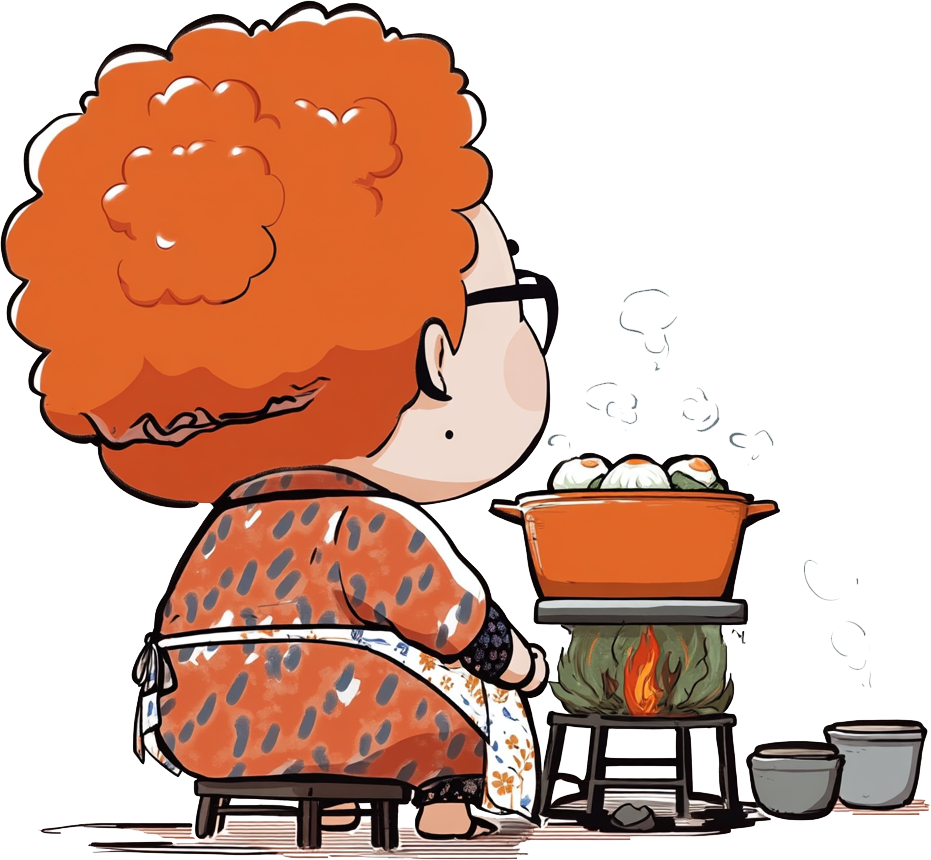
When Kimchi Mama left Jeju, she did not pack everything.
Some things belonged to the island — the wind’s timing, the way winter settled into stone walls, the quiet pauses between tasks. Those could not be moved. But there were other things she chose to carry carefully, not because they were precious on paper, but because they had proven themselves over years of living.
She brought her best recipes because they were not ideas.
They were agreements.
Agreements between time and temperature. Between patience and flavour. Between what people needed and what food could give without demanding anything in return.
“A recipe is only worth carrying if it has taken care of people before,” Kimchi Mama says. “Otherwise, it’s just words.”
Her best recipes were the ones that survived repetition. The ones cooked on good days and bad days. The ones that tasted right even when she was tired. They were steady under pressure and generous by nature. They didn’t need explaining. They simply worked.
These recipes had already earned trust.
So when the journey toward Singapore began, Kimchi Mama did not feel the urge to reinvent. She felt the responsibility to preserve. Changing them would have meant breaking something that had taken years to build.
That responsibility is still felt today at Kimchi Mama — where dishes arrive with quiet confidence, unchanged in spirit even as they meet a new place.
🌶️ Recipes That Carry Memory
Kimchi Mama’s cooking has always been shaped by lived experience rather than novelty. The recipes she chose to bring forward are woven throughout Kimchi Mama’s story — each one carrying memory, discipline, and care earned long before they were shared widely.
Her best recipes were not the most complex. They were the most reliable.
She chose dishes that settled the body. Kimchi that fermented patiently and aged gracefully. Stews that deepened instead of peaking sharply. Sides that balanced the table rather than competing on it. These were foods designed to be returned to — again and again — without fatigue.
“If people come back without asking what’s new, you’ve done something right,” she says.
Bringing these recipes meant trusting that steadiness would translate. That care would not be lost in a new rhythm. That patience could survive a faster city if it was protected deliberately.
That trust shows clearly when guests explore Kimchi Mama’s menu or browse the dishes in the Kimchi Mama Menu PDF. The food feels grounded, not adapted. Familiar, even on a first visit.
Her decision also reflected a deeper belief: good recipes are inclusive by nature. They welcome different appetites, different backgrounds, different needs. They do not rely on bravado or exclusivity to be memorable.
This is why Kimchi Mama’s commitment to halal certification fit naturally alongside her recipes. The best dishes are the ones that let more people sit comfortably at the table without compromise.
🌿 Carrying What Already Works
By bringing her best recipes with her, Kimchi Mama was not holding onto the past. She was honouring what had already proven itself through care, repetition, and trust.
Those recipes had fed families.
They had supported communities.
They had carried people through cold seasons and quiet days.
They deserved to travel.
If you’d like to taste why these recipes were worth bringing forward unchanged, Kimchi Mama welcomes you warmly at her Singapore location — where every dish still carries the same intention it always has: to nourish properly, without asking for attention.
As Kimchi Mama herself puts it:
“The best recipes don’t need a new place. They make the place feel right.”
And with her best recipes firmly in hand, Kimchi Mama’s journey continues — steady, generous, and true to itself.