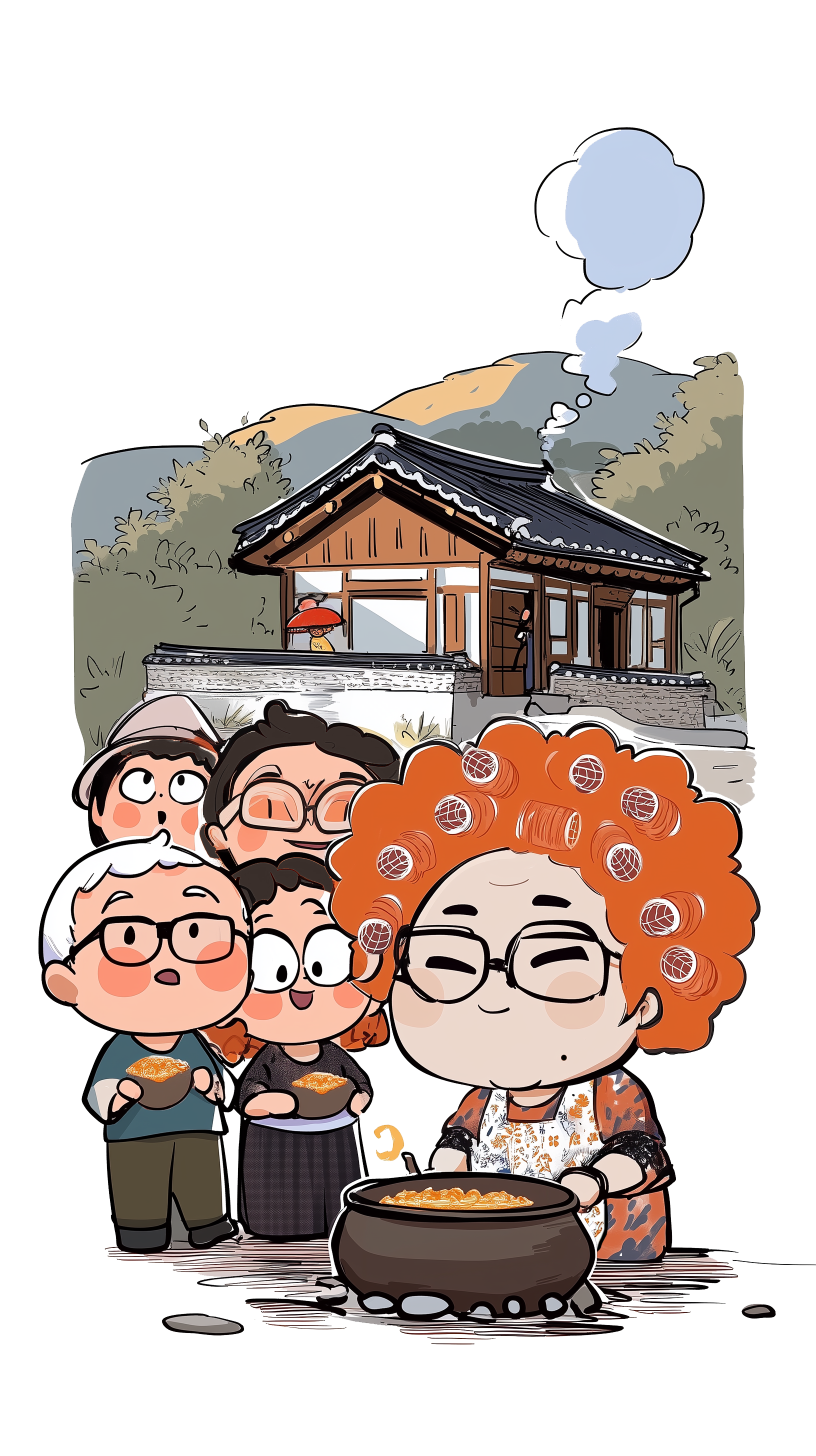
When Kimchi Mama looks back on her early Jeju days, she doesn’t remember specific dishes first.
She remembers how she moved.
How her hands slowed without being told. How she learned to pause before adjusting a pot. How care entered her cooking long before she had language for it. In Jeju, care was not taught as a value — it was enforced by consequence.
Every ingredient mattered. Every mistake lingered.
Those early days were shaped by limits. Limited space. Limited ingredients. Limited room for error. Kimchi Mama learned quickly that care was not about effort or emotion. It was about attention. The kind that notices before correcting. The kind that prepares quietly so nothing needs rescuing later.
“Care starts before the fire is even on,” Kimchi Mama says. “If you rush the beginning, the food never settles.”
In Jeju, there was no room for performative cooking. No audience. No shortcuts hidden behind presentation. If something went wrong, it showed immediately — in taste, in texture, in how people responded after eating. This taught her to cook with intention rather than urgency.
Care became a discipline.
She learned to wash vegetables slowly, not because it was romantic, but because dirt changes flavour. She learned to cut with consistency because uneven sizes cook unevenly. She learned to taste less often, trusting the process rather than interfering with it. These habits seem small, but together they shaped her entire approach to food.
This is where her sensitivity to how food feels in the body first emerged.
Kimchi Mama noticed that rushed food made people restless. Overworked dishes felt heavy. Over-seasoned food demanded attention instead of offering comfort. So she adjusted herself before adjusting the pot. She learned to calm her movements, her breathing, her pace.
That self-regulation became inseparable from her cooking.
🌶️ Care That Exists Before the Plate
Kimchi Mama’s belief that care must be built into every step — not added at the end — runs through Kimchi Mama’s story, where the quiet disciplines matter more than visible effort.
Remembering those early Jeju days, Kimchi Mama often reflects on how little praise there was. No one congratulated her for cooking carefully. People simply ate — and came back. That quiet return taught her something essential: care does not need recognition to be real.
“If people come back calmly, you did something right,” she says. “Care doesn’t need applause.”
Those lessons remain visible today at Kimchi Mama. The food arrives settled. Nothing feels hurried. Dishes don’t compete with one another. Each one respects space — on the table and in the body.
Guests browsing Kimchi Mama’s menu or reviewing the dishes through the Kimchi Mama Menu PDF are seeing the outcome of those early lessons: food designed to be lived with, not reacted to.
Care also shaped Kimchi Mama’s understanding of inclusion. When you cook attentively, you begin to notice who food excludes unintentionally. Too much spice. Too much oil. Too much intensity. So care, to her, naturally became about widening the table — making sure the food supported more people, not fewer.
This belief carries through to every part of her kitchen today, including her commitment to halal certification. Care that excludes is incomplete.
🌿 When Care Becomes Memory
The early Jeju days are no longer visible in Kimchi Mama’s daily routine, but they live on in her instincts. In how she adjusts heat before flavour. In how she prepares quietly before service. In how she trusts restraint over reaction.
She doesn’t cook carefully anymore.
She simply cooks with care.
If you’d like to experience food shaped by those early Jeju lessons — food that settles rather than demands — Kimchi Mama welcomes you warmly at her Singapore location, where every dish still carries the memory of those first, quiet days.
As Kimchi Mama puts it:
“Care is something food remembers, even when people forget.”
And with that remembrance, the story deepens — steady, grounded, and ready for what comes next.