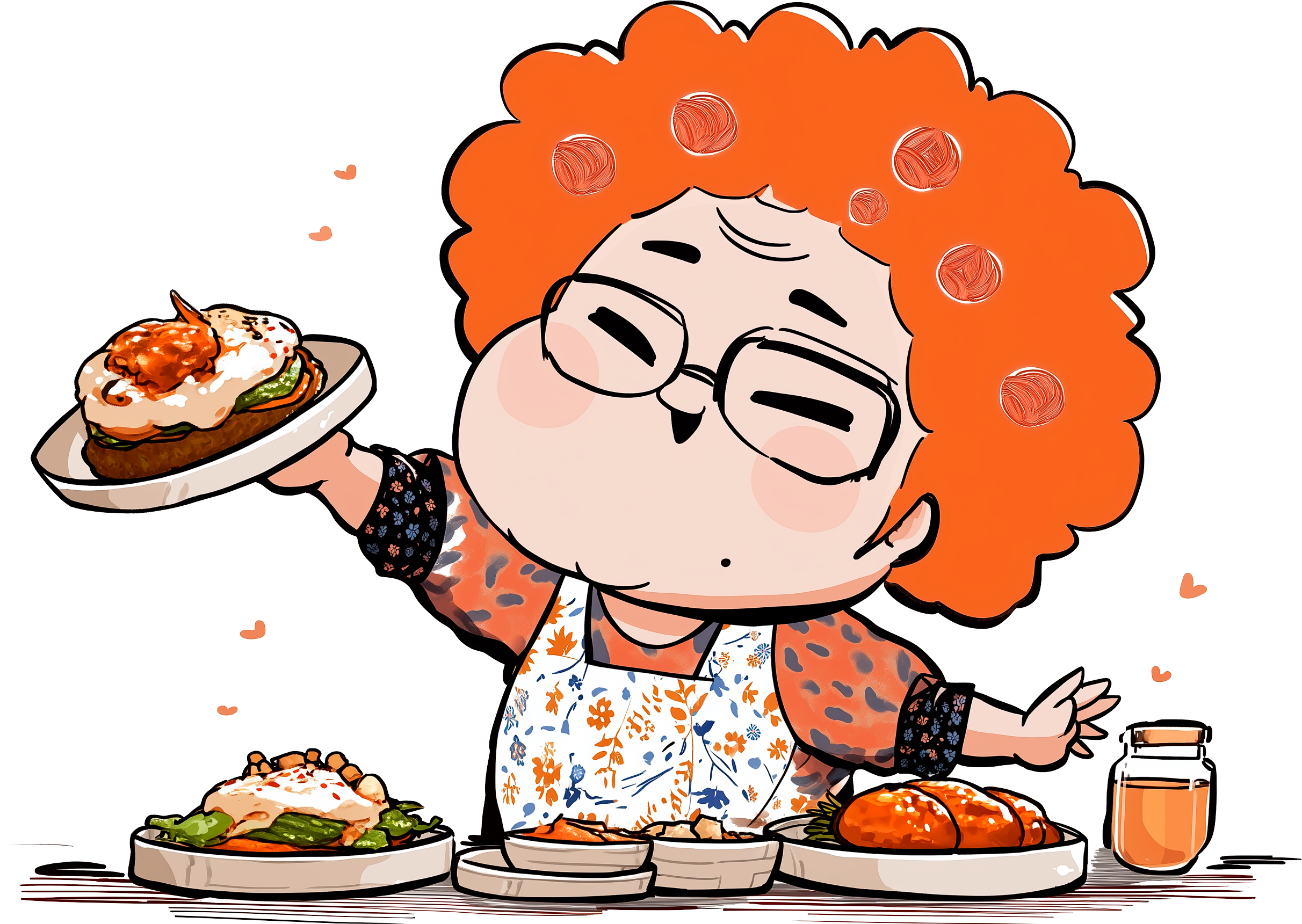
At a certain point in Jeju, Kimchi Mama stopped cooking only for herself.
There was no announcement. No decision marked in time. It simply happened the way most real changes do — gradually, almost invisibly. One extra portion made “just in case.” A neighbour dropping by unannounced. Someone staying longer at the table than expected. A pot refilled without comment.
Cooking for others did not arrive as a new chapter. It arrived as a widening circle.
In these years, Kimchi Mama’s days became less about her own rhythm and more about other people’s needs. Meals were adjusted quietly. Portions changed. Flavours softened or deepened depending on who was eating. She began to think less about what she wanted to cook, and more about what would help someone get through the day.
“When you cook for others long enough, your ego gets tired first,” Kimchi Mama says. “Then your hands learn to be honest.”
This period shaped her in ways technique never could.
Cooking for others repeatedly teaches humility. Not everyone reacts the same way to food. Not everyone needs intensity. Some need calm. Some need warmth. Some need familiarity more than excitement. Kimchi Mama learned to listen not just to ingredients, but to people — their pace, their silence, their appetite.
Strength, during these years, was not loud. It was practical.
She cooked even when tired. She cooked even when unappreciated. She cooked when it would have been easier to do something simpler, faster, or less thoughtful. And over time, something settled into her bones: consistency became non-negotiable.
This is where her quiet strength formed.
Not the strength of pushing through at all costs, but the strength of maintaining care without resentment. She learned how to show up without draining herself. How to give without overextending. How to serve generously while protecting the integrity of the food.
These lessons are subtle, but they are the reason Kimchi Mama feels so steady today. Her food doesn’t perform. It supports. It doesn’t ask to be admired. It asks to be trusted.
🌶️ Cooking That Carries Responsibility
Kimchi Mama’s approach was shaped long before a public kitchen existed. Her philosophy — that food should support people quietly — runs through Kimchi Mama’s story, where cooking is shown not as self-expression, but as long-term responsibility.
As she cooked for more people, Kimchi Mama also learned boundaries. Not every dish needed improvement. Not every comment required reaction. She learned to filter feedback gently, keeping what mattered and letting the rest pass. This ability — to absorb without destabilising — is rare, and it shows in her cooking.
Her kimchi, especially, became a reflection of this strength. It grew consistent across batches, calm in flavour, and reliable in how it made people feel. Fermentation was no longer an experiment. It was a commitment.
“Kimchi is for living with, not showing off,” she says. “If it exhausts you, it’s wrong.”
During these years, people began returning not because they were impressed, but because they felt safe eating her food. Safe to come hungry. Safe to eat slowly. Safe to return again and again without surprise.
This reliability is why her dishes today feel grounding rather than heavy. Whether someone encounters them through Kimchi Mama’s menu or explores the dishes more closely via the Kimchi Mama Menu PDF, the intention remains the same: food that holds people together, quietly.
These years also deepened her belief that cooking is a form of inclusion. When you cook for others long enough, you stop asking who belongs at the table. You simply make space. This belief would later shape every decision she made — including her commitment to serving food that is halal certified, dependable, and respectful to all.
🌿 Strength That Doesn’t Need to Announce Itself
By the end of this chapter in her life, Kimchi Mama had become something rare: a cook who did not need recognition to keep her standards intact. Her strength was internal. Her confidence lived in repetition, not praise.
She was no longer learning how to cook.
She was learning how to carry responsibility without losing gentleness.
And that quiet strength — earned through years of cooking for others — is exactly what would allow her, one day, to carry her food beyond Jeju.
If you want to experience how that strength now lives on at the table, Kimchi Mama welcomes you warmly at her Singapore location — where every dish still carries the discipline, humility, and care formed long before the world arrived.
As Kimchi Mama puts it herself:
“When you cook for others long enough, strength stops being loud. It becomes steady.”
The journey continues.